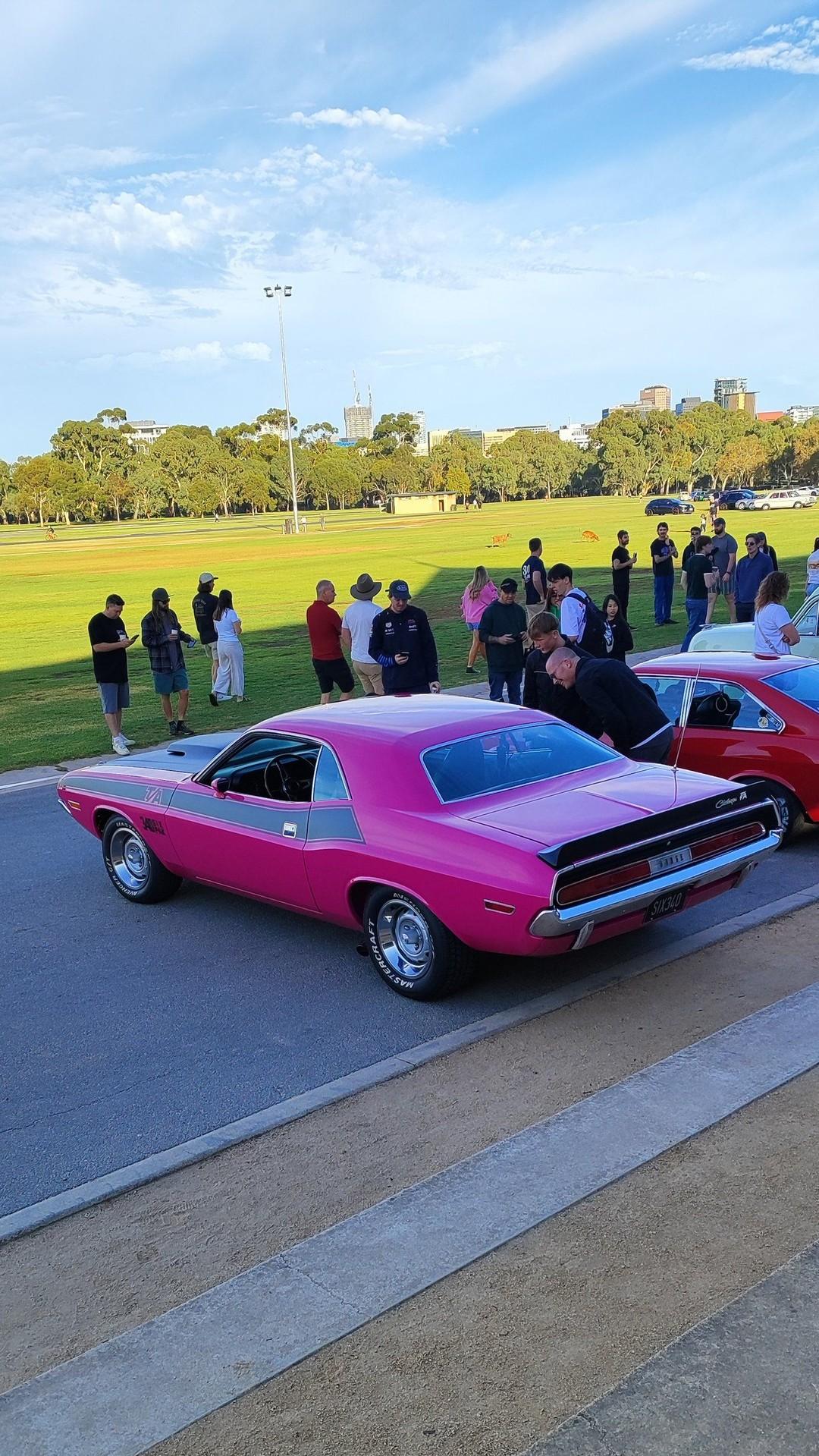
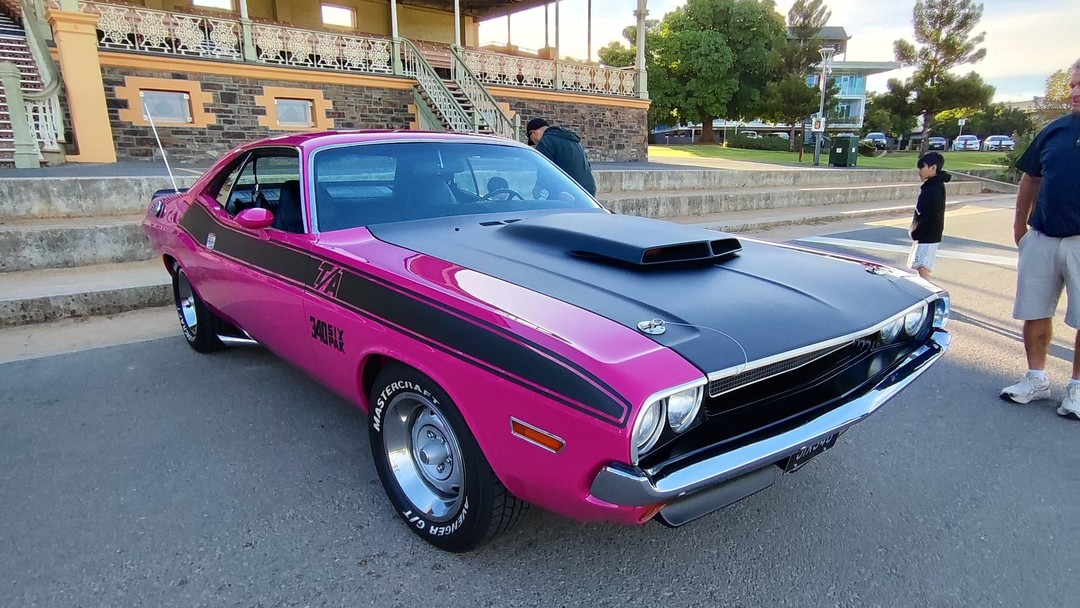
The Dodge Challenger is a notable name in the American automobile industry, spanning three distinct generations. The Challenger name was first used in marketing in 1959, offering a "value version" of the full-sized Coronet Silver Challenger. The first generation, produced from 1970 to 1974, was a pony car built on the Chrysler E platform, sharing components with the Plymouth Barracuda. The second generation, spanning model years 1978 to 1983, saw the Challenger as a badge-engineered version of the Mitsubishi Galant Lambda/Sapporo, a coupe derived from an economical compact car.
The current and third generation of the Dodge Challenger, introduced in early 2008, stands out as a full-size muscle car aimed at rivaling the fifth-generation Ford Mustang and Chevrolet Camaro. The modern Challenger continues the legacy of its predecessors by delivering impressive power and performance while retaining its classic muscle car aesthetics. With a focus on striking design elements and robust performance capabilities, the third-generation Challenger has earned a strong reputation among muscle car enthusiasts and automotive aficionados.
In summary, the Dodge Challenger has evolved through different eras, maintaining its position as a prominent player in the muscle car segment. The vehicle's rich history, spanning from the 1970s to the present day, showcases the brand's commitment to delivering exciting driving experiences and timeless style. Ultimately, the Dodge Challenger remains a symbol of American automotive ingenuity and craftsmanship.