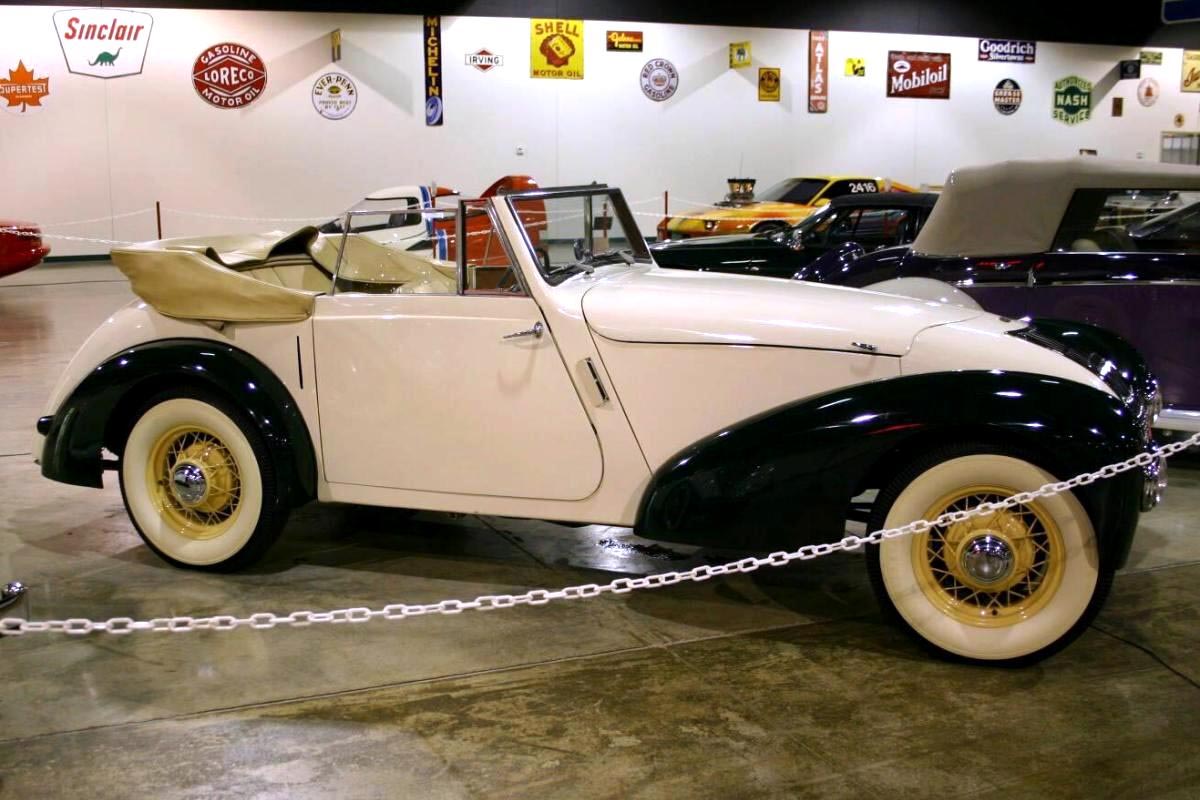
Founded in 1945 by Sydney Allard, Allard Motor Company Limited was an innovative car manufacturer based in Clapham, London. However, within just a decade, the production of cars almost ceased. Despite its brief stint in the automotive industry, Allard managed to produce approximately 1,900 cars before closing its doors in 1958.
The cars engineered by Allard featured an intriguing amalgamation of British chassis and body design, coupled with powerful American V8 engines. This unique combination offered a remarkable power-to-weight ratio, setting a precedent for iconic cars like the Sunbeam Tiger and AC Cobra in the early 1960s. Notably, Carroll Shelby and Zora Arkus-Duntov, both legendary figures in the automotive world, were behind the wheels of Allards in the 1950s.
In the years before the Second World War, Allard had already made a name for itself in "trials" events, which were rally-like competitions on challenging terrains. The first Allard cars were designed with this in mind, often featuring a Ford flathead V8 engine. The cars used the high torque of the American engines to excel in these low-speed competitions.
As for technological advancements, independent front suspension was introduced by cutting the front beam axle and mounting the halves as swing axles. This feature became a staple in almost all subsequent Allard specials.
Moreover, Allard started to modify Fords in 1937, with the ambition of volume production. However, the outbreak of the war in 1939 disrupted these plans. During the war, Allard focused on building Ford-based trucks. Post-war, the company returned to car production, launching models like the J, K, and L, all of which were designed with steel chassis and lightweight body shells. Allard labeled its models sequentially, using letters to signify the car type: "J" for two-seaters, "K" for tourers, "L" for four-seaters, and so on.
One of the most notable models was the J2, which was designed to target the U.S. market. Weighing just over 2,000 pounds, this model featured a hand-formed aluminum body and was considered a strong contender in international races during the early 1950s.
Despite its achievements and contributions to automotive engineering, Allard Motor Company couldn't sustain itself in a rapidly evolving market and eventually ceased operations. Yet, the influence of Allard cars on future high-performance vehicles should not be underestimated, and they continue to hold a unique place in automotive history.