Ferrari has officially pulled back the curtain on the Ferrari Luce, revealing the interior, interface, and philosophy behind what will become the brand’s first fully electric production car. This isn’t just another EV announcement — it’s Ferrari carefully, and deliberately, redefining what electrification means for the Prancing Horse.
Rather than leading with batteries, motors, or range figures, Ferrari has chosen to start with something far more telling: how the car feels to sit in, touch, and drive. That choice says everything about how seriously Maranello is taking this moment.
Ferrari’s First EV — But on Ferrari’s Terms
The Luce represents a genuine first for Ferrari. Not a hybrid, not an experiment, but a clean-sheet, full-electric sports car that opens an entirely new segment for the brand. Ferrari has been clear that electrification here is not the headline — it’s the enabler.
“Luce,” meaning light or illumination in Italian, is positioned as a philosophy rather than a powertrain. Ferrari isn’t chasing trends or trying to out-tech Silicon Valley. Instead, it’s framing the Luce as a car shaped by clarity, restraint, and purpose — a Ferrari that happens to be electric, not an electric car trying to feel like a Ferrari.
That distinction matters deeply to Ferrari’s identity.
The Apple Influence You Can Actually Feel
One of the most fascinating aspects of the Luce is who helped design it. Ferrari has been working for five years with LoveFrom, the creative collective founded by Sir Jony Ive, the legendary designer behind the iPhone, iMac, and Apple Watch.
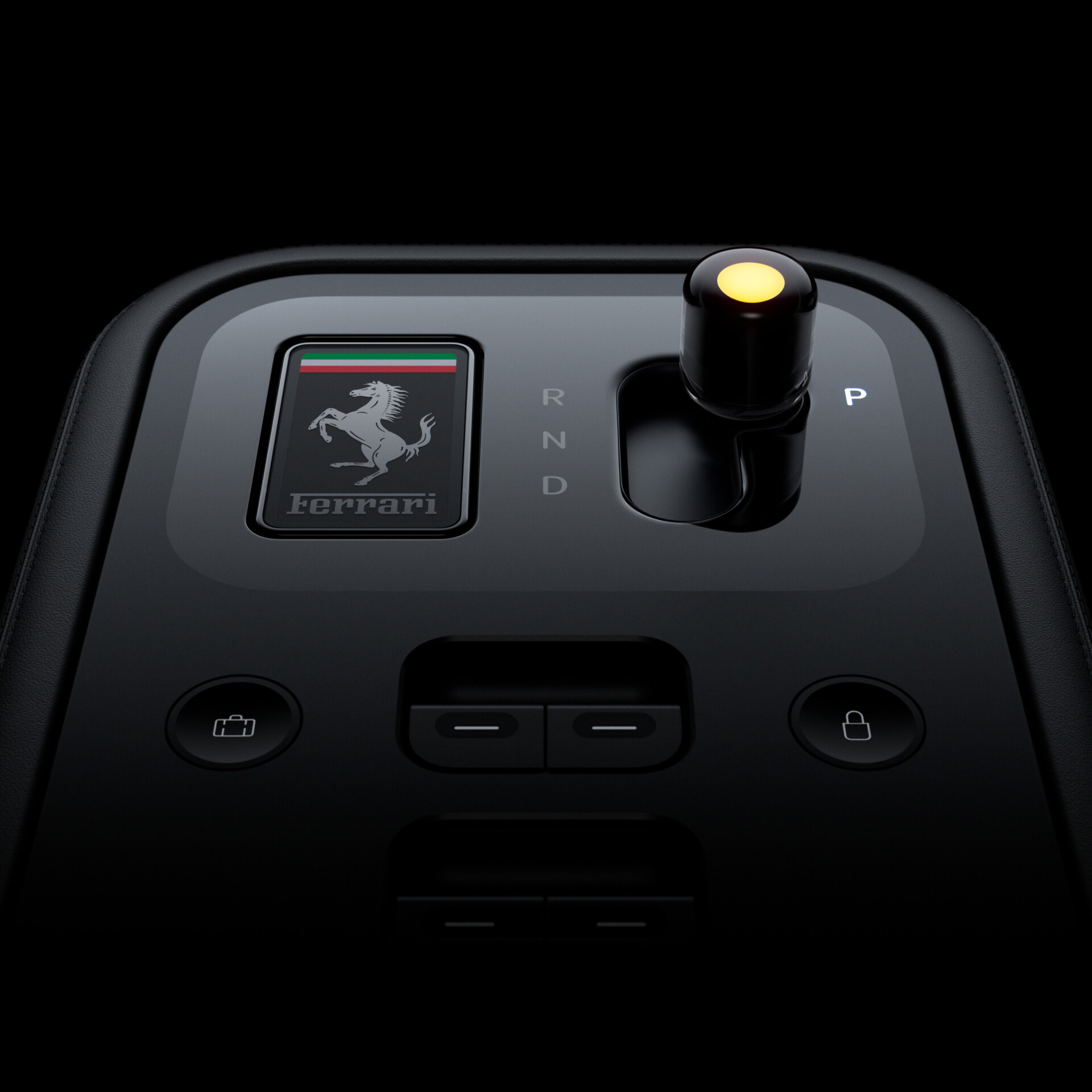
This influence is obvious the moment you see the cabin. In a world where EV interiors are dominated by giant touchscreens, Ferrari has gone in the opposite direction. The Luce brings back beautifully engineered physical buttons, toggles, and dials, each designed to be intuitive, tactile, and satisfying to use.
The philosophy is pure Ive: technology should disappear into the experience, not shout for attention.
A Cabin That Rejects the EV Rulebook
The Luce interior is calm, focused, and almost architectural. Ferrari describes it as a single, clean volume — uncluttered, intentional, and centred entirely around driving.
Key highlights include:
A steering-wheel-mounted binnacle that moves with the wheel, a first for Ferrari
Dual overlapping OLED displays with extraordinary depth and clarity
A rotating central control panel that can face driver or passenger
A glass Ferrari key with an E Ink display, activated through a theatrical start-up ritual
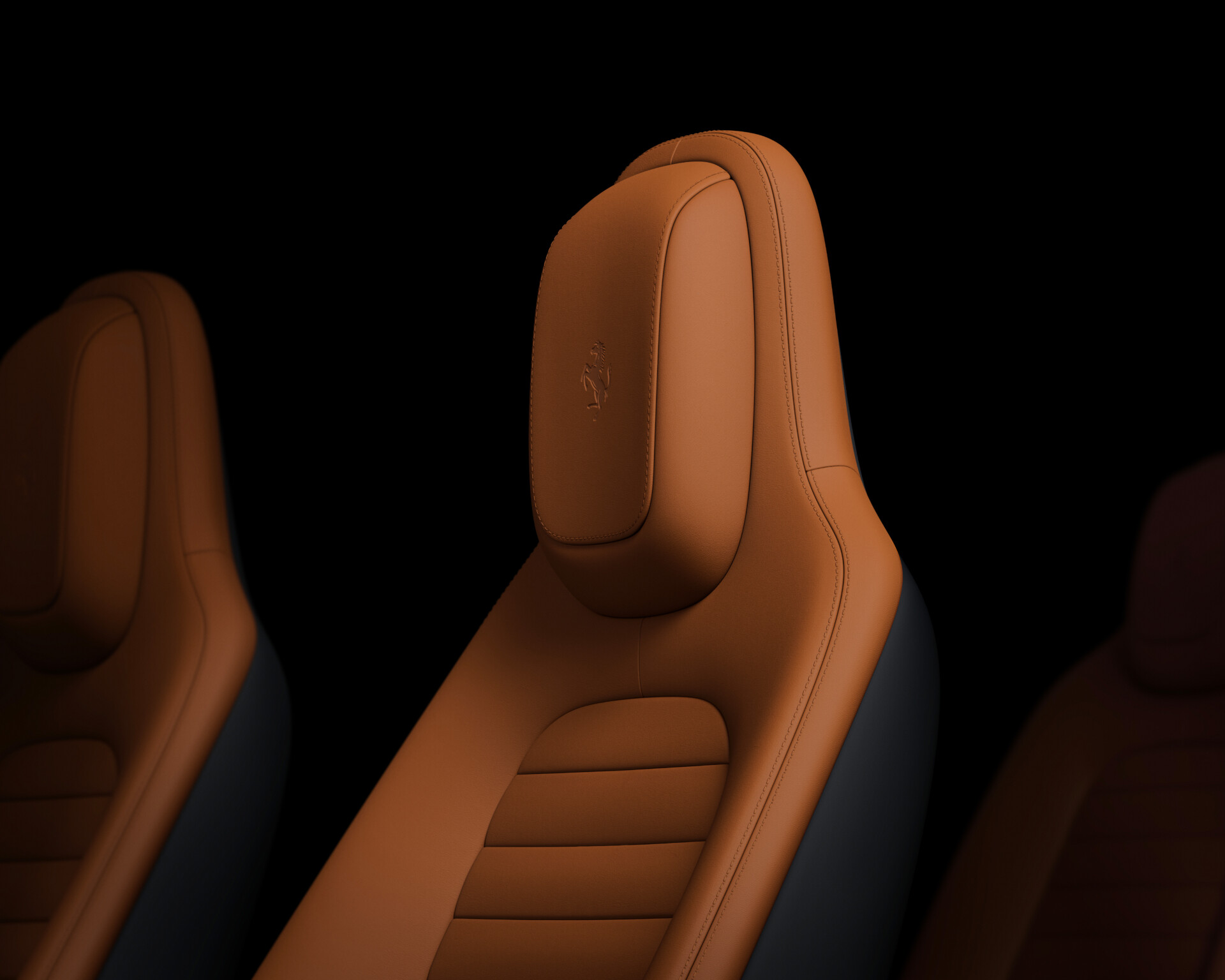
Even the materials tell a story. CNC-machined aluminium, recycled alloys, Gorilla Glass, and watch-inspired detailing replace the typical EV gloss with something far more timeless.
Tradition, Reimagined — Not Replaced
Despite being electric, the Luce is deeply rooted in Ferrari history. The three-spoke steering wheel nods to classic 1950s Ferraris. The graphics reference vintage Veglia and Jaeger dials. The multi-function “multigraph” echoes fine chronographs more than digital widgets.
This isn’t nostalgia for nostalgia’s sake. It’s Ferrari proving that emotion doesn’t disappear when engines do — it just needs to be expressed differently.
What Comes Next
Ferrari has confirmed the Luce’s exterior will be revealed in Italy in May 2026, completing a three-stage launch that began with technology, moved to interior and interface, and will finish with form.
For now, one thing is clear: Ferrari isn’t afraid of the electric future. But it refuses to surrender its soul to it.
The Luce isn’t Ferrari going electric.
It’s Ferrari showing everyone else how electric can still feel like Ferrari.

