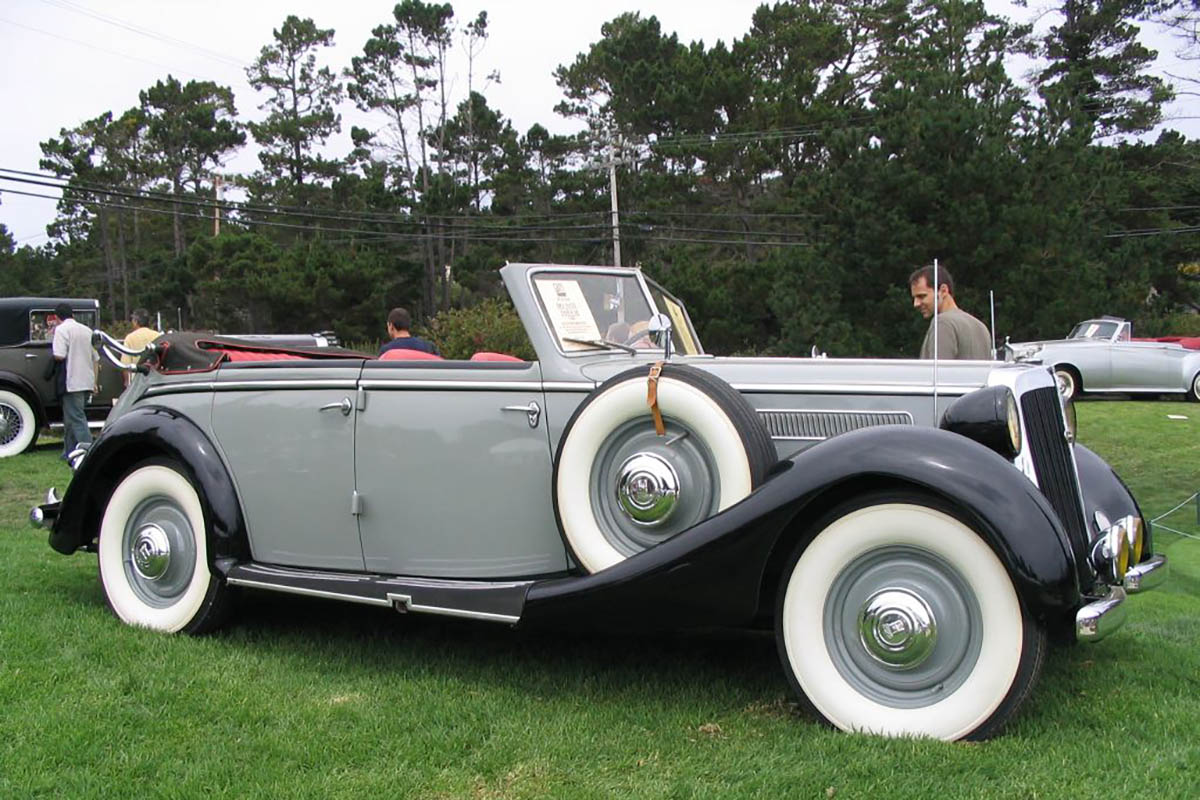
Horch, an emblematic marque from Germany, stands as a cornerstone in the luxurious automotive landscape, with its history deeply intertwined with the Auto Union and today’s Audi. Founded by August Horch in 1899, this brand quickly became synonymous with high-end engineering and exclusive automobiles. Horch, a former employee of Carl Benz, ventured out to realize his vision of producing only "big, powerful and reliable cars," a philosophy that shaped the future of the brand.
The company, originally established in Cologne, was moved to Zwickau where Horch created the first six-cylinder models in 1907. Despite initial commercial struggles, Horch's vehicles gained fame for their quality, leading to significant sales and participation in prestigious races. However, due to disagreements with shareholders over the direction of the company and its racing pursuits, Horch left in 1909 to establish Audi, a clever wordplay on his name which means "listen" in Latin, thereby circumventing a legal dispute over the use of the Horch brand.
Auto Union was formed in 1932, merging Horch, Audi, DKW, and Wanderer, with the four rings of today's Audi logo representing these brands. This conglomerate thrived in the pre-war era, introducing revolutionary designs like the Auto Union Grand Prix race cars. Post World War II, the Horch brand faded, eventually being absorbed by what became the modern Audi, reviving and utilizing Horch’s legacy as a sub-brand for ultra-luxury editions, akin to Mercedes-Benz's Maybach.
Today, the Horch name lives on through Audi, symbolizing a blend of historic prestige with modern luxury, encapsulating a legacy of innovation and excellence in automotive design and performance.